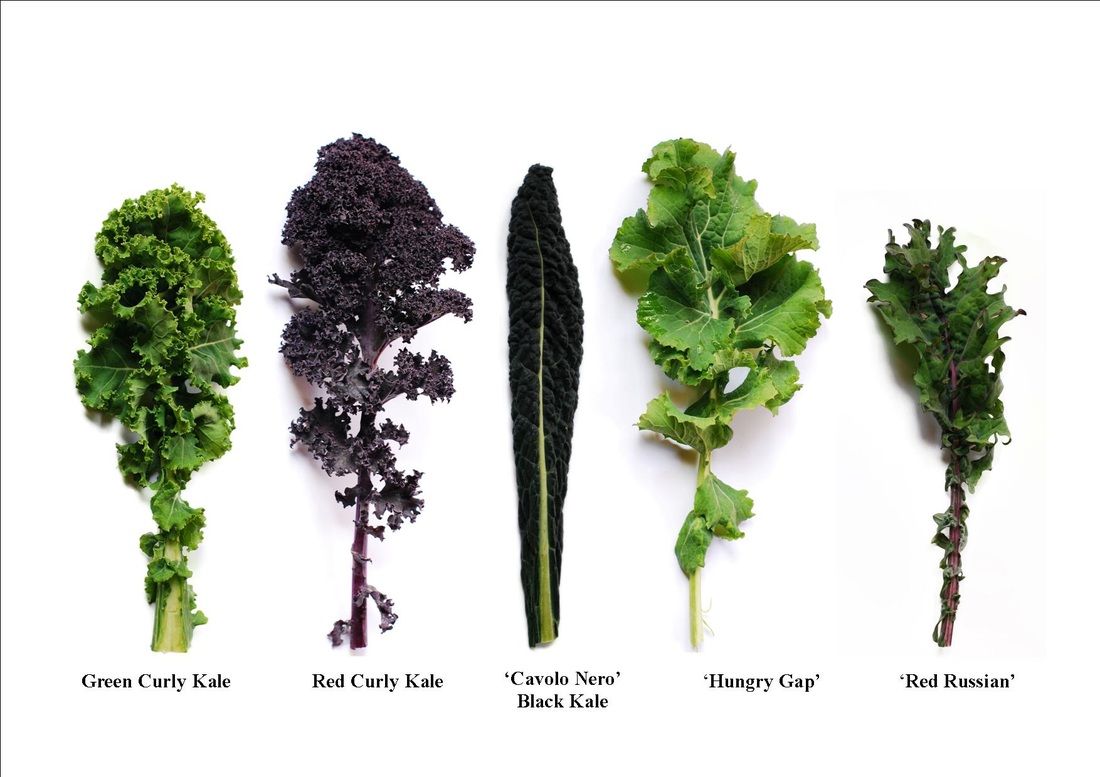

What to do with Curly Kale and Cavolo Nero
When using larger leaves of these kales, its often worth treating the stems and leaves as 2 different ingredients. Strip the leaves off the stems and use as steamed greens, dressed simply. Or cut up finely and add to Asian style soups. (The stems can be saved and added to a stir fry).
Or just break the whole leaves into pieces and add some colour to a slow cooking casserole.
Crispy Kale - make your own version of ‘crispy seaweed’. Cut up some kale leaf, and toss in olive oil and salt. Spread out on a baking tray and cook for 10 mins at 180 C / Gas 4. Stir around making sure all the kale is coated in some oil, then cook for a further 8-10 mins until the kale is crispy. Enjoy!
What to do with Red Russian and Hungry Gap Kales
These kales are great as part of a winter leafy salad, the texture of the Red Russian is coarser
so best to slice finely. Hungry Gap has a taste similar to pak choi.
They’re also good in stir fries, but just add for the last couple of minutes to keep some crunch. In the leaf.
Kale Pesto— Just use kale leaf instead of basil in a pesto recipe, but don’t just use as a pasta sauce, you can coat spuds in it too, or use it in your sandwiches.
Squash and pumpkins
Some varieties of squash can store through to March or April, making them a good winter food crop (hence the name 'winter squash') - perfect for those warming soups and stews.
Here are some of the more popular varieties we grow:-
Mild, slightly sweet flavour
Cut in half lengthways, scoop out seeds and stuff with softened onion and garlic, and chopped nuts, brush cut sides with oil and bake for 45-60 mins. Top with grated cheese half-way through cooking
SUNBURST
Summer squash, similar taste to marrows
Best roast whole in the oven, after cutting off top and scooping out seeds. Try stuffing with cooked ratatouille and chunks of feta for a Mediterranean feast
RED KURI
Sweet, nutty flavour
Cut a slice off the top, scoop out the seeds, replace top and cook in moderate oven for 45-60 mins. The squash is
it’s own bowl, just scoop out flesh and eat. Also good to sweeten stews and curries
GEM
Sweet, mild taste, good texture
The perfect single portion squash, slice off the top, scoop out seeds and bake in a moderate oven for 30 mins
SPAGHETTI
Mild taste, interesting texture!
Best baked or steamed, then scoop out and top with a cheese sauce. Yellow flesh that looks like other squash when raw, but when cooked the flesh comes away in long strands, hence the name
BUTTERNUT
Sweet, creamy taste
Very versatile, use in all squash recipes. Makes good squash oven chips and tasty babyfood. Delicious in risotto, great in a soup with milk/cream. Easy to cut and de-seed, can eat skin
CROWN PRINCE
Strong, sweet, slightly nutty taste
Cut open, scoop out seeds, peel and use flesh in any squash recipe. Particularly good for oven chips and roasting. Also great for adding to stews and curries. Can store until Apr/May
HOKOIDO
Sweet, rich, nutty flavour—delicious
Peel and scoop out seeds then roast chunks as for roast potatoes—yummy! Or steam and mash with other root vegetables. (Martin’s Favourite)
DELICATA
Strong, nutty flavour
Cut in half length-ways, scoop out the seeds, slice thinly and stir-fry for 15 mins – easy fast food ! Also good
roast, prepare as above, oil a baking sheet and place squash cut sides down, cook until easy to pierce
Ripple Farm Salad Leaves
What’s in a Bag?
The salad bag contents are carefully chosen to give a balance of tastes, textures, aromas and colours to please the taste buds and the eyes. Edible flowers are often included for appearance (they taste good too) and a variety of herbs are added sparingly to complement the salad leaves. The mix of ingredients changes gradually through the seasons.
The ‘summer’ bags tend to be milder and sweeter, a typical bag may include mizuna, green wave, rocket, lolla rossa and oakleaf lettuce with a taste of nasturtium leaf and flower. The ‘winter’ bags rely on more of the hardy, and often hot, Chinese and Japanese leaves, a bag may include the hot giant red mustard, bright red chicory, green wave, pak choi and the delicate yellow flowers of purple flowering choy sum. No two bags are the same, with ingredients changing from week to week according to the seasons.
Preparing the Salad
The salad leaves are packed un-washed. To prepare, we recommend washing, then cutting or tearing all the leaves and mixing together, and serve with a dressing of your choice. Eat as fresh as possible to conserve taste and nutritional value. The salad will store in the bag in the fridge, or after washing, spin off excess water and store in an airtight container, again in the fridge.
Mustard - Allergen Warning
For most of the year our mixed leaf salad bags contain mustard leaves, this is indicated on our salad bag labels as mustard is one of 14 allergens that must be clearly labelled on UK packaging.